On-Shore Power Supply Systems

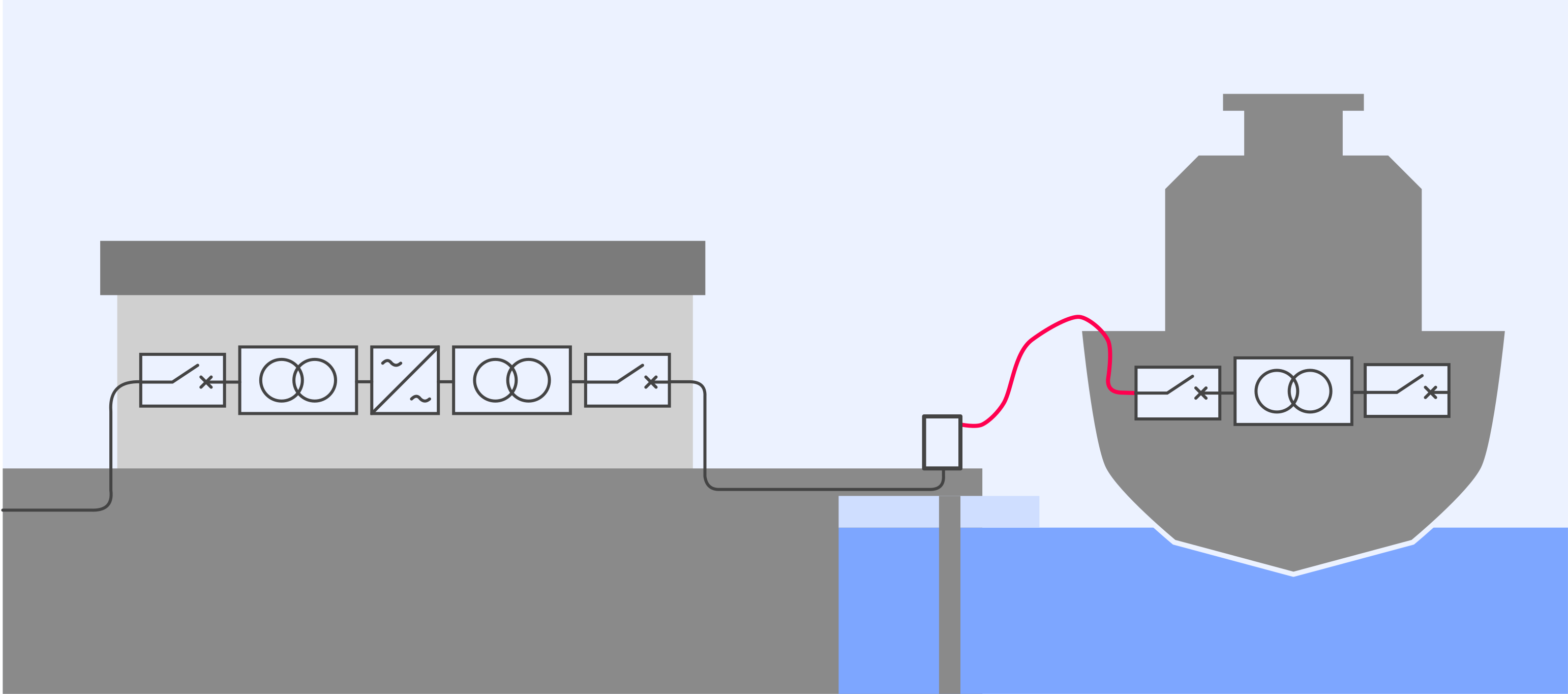
on shore power supply main components

OPS-systems

Shipping is under mounting regulatory and commercial pressure to decarbonize. For vessels berthed in port, onshore power supply (OPS), also known as cold ironing or alternative maritime power (AMP), is one of the most immediate and impactful solutions available. It eliminates auxiliary engine emissions at berth entirely, replacing diesel generation with clean grid power.

NEPower delivers turnkey OPS systems for ports, terminals, and industrial marine facilities across the Nordic region and Europe. We provide full EPC delivery of shore power infrastructure, from grid connection and transformer stations through shore connection panels, frequency converters, and vessel-side interface — compliant with current EU regulations and international standards.

Regulations

The regulatory landscape for shore power in Europe has changed significantly in recent years, and it will continue to tighten through this decade.

FuelEU Maritime requires vessels operating within EU waters to progressively reduce their greenhouse gas intensity. For vessels at berth, connecting to OPS, rather than running auxiliary engines, is one of the primary compliance mechanisms.

AFIR (Alternative Fuels Infrastructure Regulation) sets binding targets for shore-side electricity supply at TEN-T core and comprehensive ports. Under AFIR, ports must provide OPS infrastructure for container ships and passenger vessels by 2030, with further vessel categories following.

Delivery

NEPower delivers onshore power supply systems as a complete turnkey package. We handle engineering, procurement, construction, and commissioning, giving you a single accountable contractor across the full project scope.

Shore power systems require a reliable, adequately sized grid connection capable of supporting the full load of vessels at berth. We assess existing grid capacity, design the required reinforcement, and build transformer stations and switchgear rated for the OPS load profile.

Interested to know more?

We are glad to help.

Joni Kivimäki

Director, Service

sales@nepower.fi

Compatibility

Most large vessels operate on 60 Hz electrical systems, while the European grid runs at 50 Hz. Shore power systems serving international vessel traffic typically require static frequency converters (SFC) to bridge this gap. We design, procure, and install frequency converter systems, including the control and protection systems required for safe vessel-to-shore connection.

Protection

Shore power systems require sophisticated protection to manage the connection and disconnection of large vessel loads safely. We design and commission protection relay schemes, earthing systems, and control interfaces that meet the requirements of IEC/IEEE 80005 and applicable grid operator standards.

Competence

NEPower's OPS engineering competence covers:
  • IEC/IEEE 80005-1: High-voltage shore connection systems (>1 kV)
  • IEC 80005-3: Low-voltage shore connection systems (≤1 kV)
  • Static frequency converter (SFC) selection, specification, and integration
  • Short-circuit and load studies for OPS transformer stations
  • Earth fault protection design for IT and TN shore power networks
  • Arc flash analysis for shore connection installations
  • Grid operator coordination for OPS load connection
  • AFIR and FuelEU Maritime compliance support
  • Energy metering and reporting systems for port billing and regulatory compliance
  • Integration with port operational systems
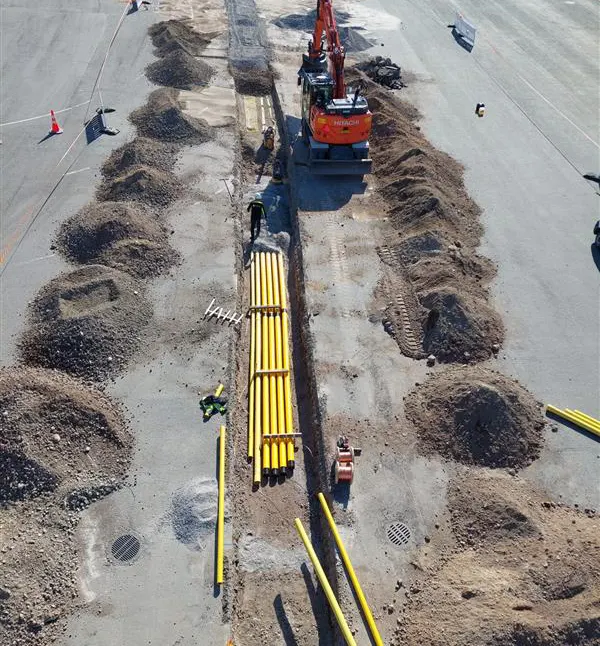
works underway at the port of rauma | töitä käynnissä rauman satamassa